
Sea Research Society’s “Peter Throckmorton Award” was created to recognize discoveries of shipwrecks with major historical and or archaeological importance made by members of the international diving community.
Each of these awards is meant to be based solely upon the importance of specific wrecks, wreck sites, or even lost fleets. Recipients need not be members of the Society, nor does receiving one of these awards confer upon the recipient either fellowship or membership in the Society. These are wreck dependent therefore recipients can receive multiple awards regardless of whether the discoveries were made in the same year or in different years. They can also be awarded retroactively or even posthumously. There is no application process and the determination of importance of the wreck or site and who should be recognized on the award as the discoverer(s) is to be determined solely by the Society’s Awards Committee. When the discovery was made by an institution or other organization, the award can go to either the organization and/or the primary director(s)/leader(s) of the discovery expedition. If the Awards Committee decides that more than one party should be named as the discoverer, each of the named parties may be presented with a copy of the certificate of award.
The first recipient of this award, which was issued posthumously and was named for him, was Edgerton Alvord “Peter” Throckmorton (July 30, 1928 – June 5, 1990). He was an American photojournalist, a pioneer underwater archaeologist, and a founding member of the Sea Research Society. Dr. Throckmorton served on the Society’s Board of Advisers until his passing at age 61 in 1990. He was also a NOGI award winner and a fellow of the Academy of Underwater Arts and Sciences. His publications included:
-
- Oldest Known Shipwreck Yields Bronze Age Cargo. by Peter Throckmorton, National Geographic (May issue, 1962).
- The Lost Ships: An Adventure in Underwater Archaeology. by Peter Throckmorton, Boston and Toronto, 1964.
- Surveying in Archaeology, by Peter Throckmorton (Aris & Phillips Ltd – Jan 1, 1969).
- Shipwrecks and Archaeology: The Unharvested Sea, published simultaneously by Little, Brown and Company, Boston and Toronto (1970).
- Diving for Treasure, by Peter Throckmorton, published simultaneously by The Viking Press, New York City, and Penguin Books Canada Limited (1977).
- The Sea Remembers: Shipwrecks and Archaeology from Homer’s Greece to the Rediscovery of the Titanic, ed. Peter Throckmorton (New York: Smithmark Publishers, 1987).
- History from the Sea, edited by Peter Throckmorton, Published by Mitchell Beazley, 1988.
- The economics of treasure hunting with real life comparisons, by Peter Throckmorton, 1990.
Past recipients (most recent discoveries listed first) have included:
Robert H. “Bobby” Pritchett III (born 1962): Awarded for his 2016 discovery of a wreck likely lost in the 1560s. Among the most important artifacts found on the wreck was a carved marble monument that was clearly one of several such monuments commissioned in 1562 by the King of France to mark France’s claims to parts of the east coast of North America. Also found were several bronze cannons with French markings. Note: Although both the state of Florida and the country of France have claimed in court filings that the wreck was La Trinité [aka the Trinity], flagship of the French explorer Jean Ribault, wrecked in 1564, that seems unlikely in that the monument does not appear on La Trinité’s very detailed manifest for its last voyage, nor do the cannons and anchors found at the wreck site match the sizes of those which would have been carried on La Trinité. It seems more likely that the wreck is that of a Spanish vessel lost while carrying prizes of war, that were either taken upon the capture and sacking of the French Fort Caroline on the May River in 1564, as that fort definitely had one of the commissioned monuments, or the monument and cannons came from the looting of a French outpost known as Charlesfort, which would also have had such a monument. Charlesfort had been settled (on present day Paris Island, South Carolina) in 1562 and was abandoned the following year. Regardless of which fort the artifacts came from, the monument found by Pritchett’s team, makes this one of the most important shipwrecks ever discovered in the Americas.
Robert H. “Bobby” Pritchett III (born 1962): Awarded for his 2011 discovery of the wreck of a mid-16th century, Spanish, merchant ship located just off Punta Cana in the Dominican Republic. The ship is believed to have been carrying the governor and vice-governor of Cuba, when it was lost. The vice-governor died in the wreck. The recoveries from this wreck constitute the largest cache of pewter ever discovered, and, to date, is the most important single find of pre-18th century pewter anywhere in the world. The work on the wreck was done by Anchor Research & Salvage and its parent company Global Marine Exploration Inc., both of which companies were headed by and largely owned by Pritchett. According to Martin Roberts, who published the definitive work on the wreck’s pewter, the find “represents a kind of Rosetta Stone for mid-16th Century pewter which is being decoded using a variety of approaches.”
Thomas G. “Tommy” Thompson (born 1952): Awarded for his and the Columbus-America Discovery Group of Ohio’s 1989 discovery and subsequent salvage of the Gold Rush era steamer Central America, which sank off the coast of South Carolina in 1857, taking 425 lives and 30,000 pounds of California gold to the ocean floor. The disaster, occurring in 8,000 feet of water, triggered the Panic of 1857, which has been described as the first global economic crisis. The company’s successful salvage of much of the gold and considerable other artifacts, employed new, groundbreaking techniques in both salvage and archaeology. Most of those techniques relied on inventions designed by Thompson and his team, specifically for the work on this wreck.
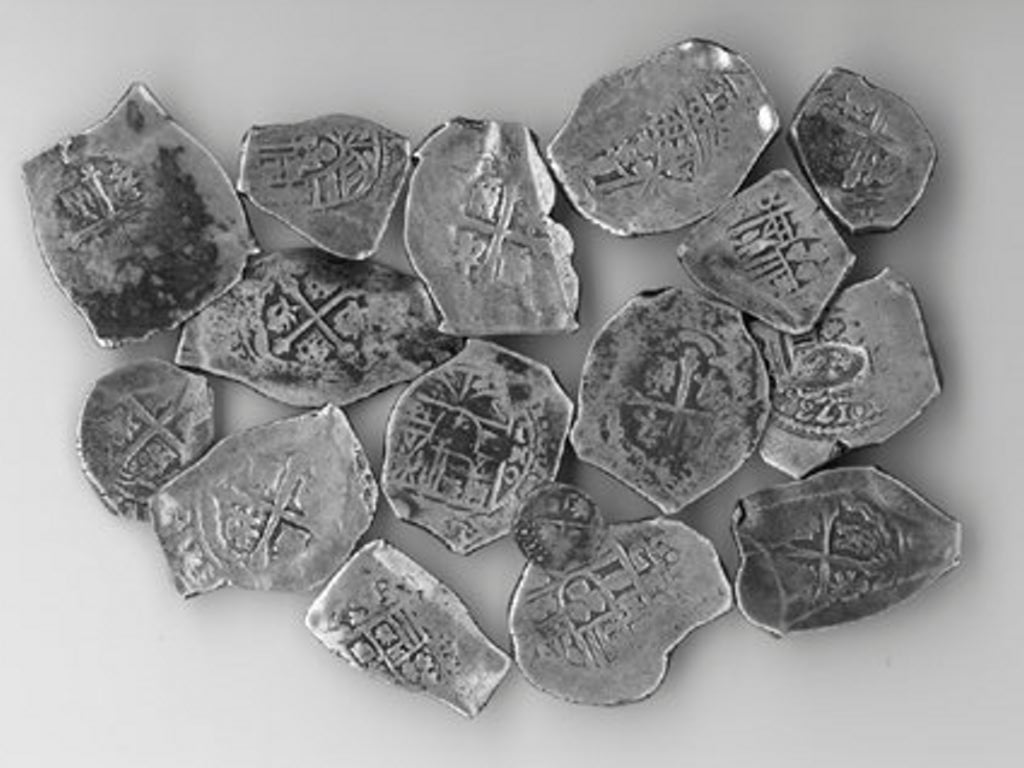
Melvin A. “Mel” Fisher (August 21, 1922 – December 19, 1998): Awarded for his search & salvage team’s 1985 discovery of the main portion of the Nuestra Señora de Atocha which had been lost in a hurricane in 1622. Although scattered artifacts from the wreck had been found by Fisher’s company as early as 1973, it had taken 16-years to find what became known as “The Atocha Motherlode.” The estimated $450 million in treasure that was recovered, included 40 tons of gold and silver; there were some 114,000 of the Spanish silver coins known as “pieces of eight,” gold coins, Colombian emeralds, gold and silver artifacts, and 1,000 silver ingots. In 1971 the State of Florida had claimed title to the wreckage and forced Fisher’s company, Treasure Salvors, Inc., into a contract giving 25% of any found treasure to the state. Fisher’s company fought the state, claiming the find should belong exclusively to the company. After eight years of litigation, the U.S. Supreme Court ruled in favor of Treasure Salvors and it was awarded rights to all found treasure from the vessel. A film about Fisher, Dreams of Gold: The Mel Fisher Story was released in 1986, starring Cliff Robertson and Loretta Swit.
Dr. Robert Ballard (born 1942) and Jean-Louis Michel (born 1945): Awarded for their 1985 discovery of the wreck of the Titanic during a joint American-French expedition led by Dr. Ballard with Woods Hole Oceanographic Institution (WHOI) and Michel with IFREMER (France’s national integrated marine science research institute). Located 12,500 feet deep, roughly 560 km off Newfoundland, the wreck was found during a secret U.S. Navy funded mission searching for sunken nuclear submarines. The Titanic was found split in two, with a mile-long debris field. The many hours of video-taped underwater exploration of the wreck, combined with the salvage of thousands of artifacts of all types and sizes, has captured the public’s imagination. The 1912 sinking of the Titanic, with the loss of around 1,500 lives, including some of America’s rich and famous, was a defining 20th-century tragedy that revolutionized maritime safety, directly causing the adoption of the first International Convention for the Safety of Life at Sea (SOLAS), mandated 24-hour radio watches, increased lifeboat requirements, and the creation of the International Ice Patrol. The vessel’s loss shattered the era’s overconfidence in industrial technology.
Sir Robert F. Marx (December 8, 1936 – July 4, 2019): Awarded for Dr. Marx’s 1972 discovery of the Spanish galleon Nuestra Señora de las Maravillas, which wrecked on the Little Bahama Bank in 1656. The Maravillas was a two-deck Spanish galleon armed with 36 bronze cannons. She left southern Spain on the 10th of July 1654 and reached Colombia on the 22nd of August and waited there for silver being shipped from Bolivia and Peru via Panama. Due to the loss on a reef off Ecuador on the 27th of October of a treasure ship carrying the silver, the Maravillas was forced to winter in Colombia and await the salvaged treasure plus additional silver from 1655. The Maravillas sank on the 4th of January 1656, after the fleet’s flagship, Nuestra Señora de la Concepción, collided with her. Marx’s expedition made international news when it recovered tons of the Maravillas’ treasure along with several of her cannons. The expedition later became the subject of the network television documentary Treasure Galleon narrated by Rod Serling. Marx was a founding member of the Sea Research Society and a NOGI award winner.
Dr. E. Lee Spence (born 1947): Awarded for his 1970 discovery of the submarine H.L. Hunley in 27 feet of water just over three and a half miles off Sullivan’s Island, South Carolina. The Hunley was the first submarine in the history of the entire world to sink an enemy ship. In 1976, based on Spence’s discovery, the Hunley was nominated by the National Park Service for placement on the National Register of Historic Places and was placed on that list in 1978. In 1980 Spence became owner of the wreck through public notice of an Admiral Case that he had filed with the Federal District Court in Charleston, South Carolina, and the fact that there were no timely intervening claims made as to ownership. In 1995, after a joint expedition by the South Carolina Institute of Archaeology & Anthropology (aka SCIAA), directed by SCIAA underwater archaeologist Dr. Mark Newell, dug up and took the first photographs of the wreck, the wreck was described as “the most important [underwater] archaeological discovery of the [20th] century,” by Dr. William S. Dudley, who was then serving as the Director of the Naval Historical Center (NHC). NCH’s chief underwater archaeologist, Dr. Robert S. Neyland, who directed the successful salvage operations, called the history making submarine “a national treasure comparable to the Wright brothers’ aircraft.” In 1995, at the official request of the South Carolina Hunley Commission, Spence donated his rights to wreck to the State, thus enabling it to be raised, conserved and put on public display.
Dr. E. Lee Spence (born 1947): Awarded for his 1965 discovery of the S.S. Georgiana (A privately armed, screw steamer with an iron hull, which was sunk while attempting to run through the Union blockade of Charleston, South Carolina. The vessel was carrying a cargo of munitions, medicines and merchandise purchased at between 1.3 and 1.5 million dollars. The United States Secretary of War, Gideon Wells, afterwards wrote to Rear-Admiral Samuel F. Du Pont, Commanding the United States South Atlantic Blockading Squadron, and said “the destruction of the Georgiana not only touched their pockets, but their hopes. She was a splendid craft, peculiarly fitted for the business of privateering.” An 1863 account in The New York Times reported the Georgiana as “more powerful than the [CSS] Alabama and the Oreto [aka CSS Florida],” while Confederate naval historian John Thomas Scharf in his 1887 book, History of the Confederate States Navy, wrote that “Apart from her cargo, the loss was a serious one to the Confederacy, as she was a much faster and stronger ship than any one of its cruisers afloat and would have made a superb man-of-war.” The steamer’s cargo was owned by George Alfred Trenholm, who later became the primary historical figure behind Margaret Mitchell’s fictional Rhett Butler in her Pulitzer Prize winning novel Gone with The Wind. Spence’s discovery of the wreck led to the 1967 passage of that state’s law protecting historic shipwrecks, and Spence’s company, Shipwrecks Inc., was awarded the first salvage permit issued under that law. Spence was the recipient of the Academy of Underwater Arts and Sciences 2012-2013 NOGI award.
Dr. E. Lee Spence (born 1947) and James Lee “Jim” Batey (born 1949): Awarded for their joint discovery in the mid to late 1960s of multiple wrecks which had been part of a fleet of old whaling vessels that had been purchased by the U.S. Navy in New England ports, subsequently filled with stone, sailed south, and intentionally sunk by the Union blockading squadron in an effort to block the two major channels used by blockade runners going in and out of Charleston, South Carolina. The sinking of the fleet, which quickly became known as the Stone Fleet, had little effect on the course of the American Civil War but caused international outrage. The purchase and sinking of so many whaling vessels, combined with the destruction of others by Confederate privateers, has been cited as one of the causes of the post war demise of the American whaling industry. The stone remains of the wrecks have effectively become artificial reefs.
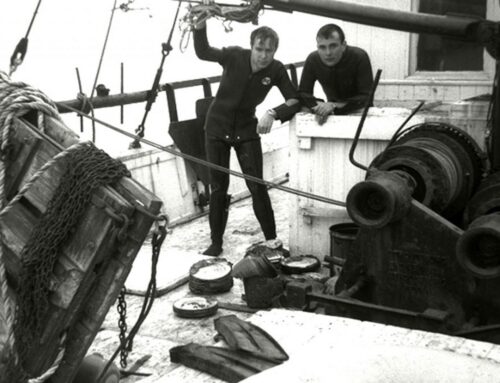
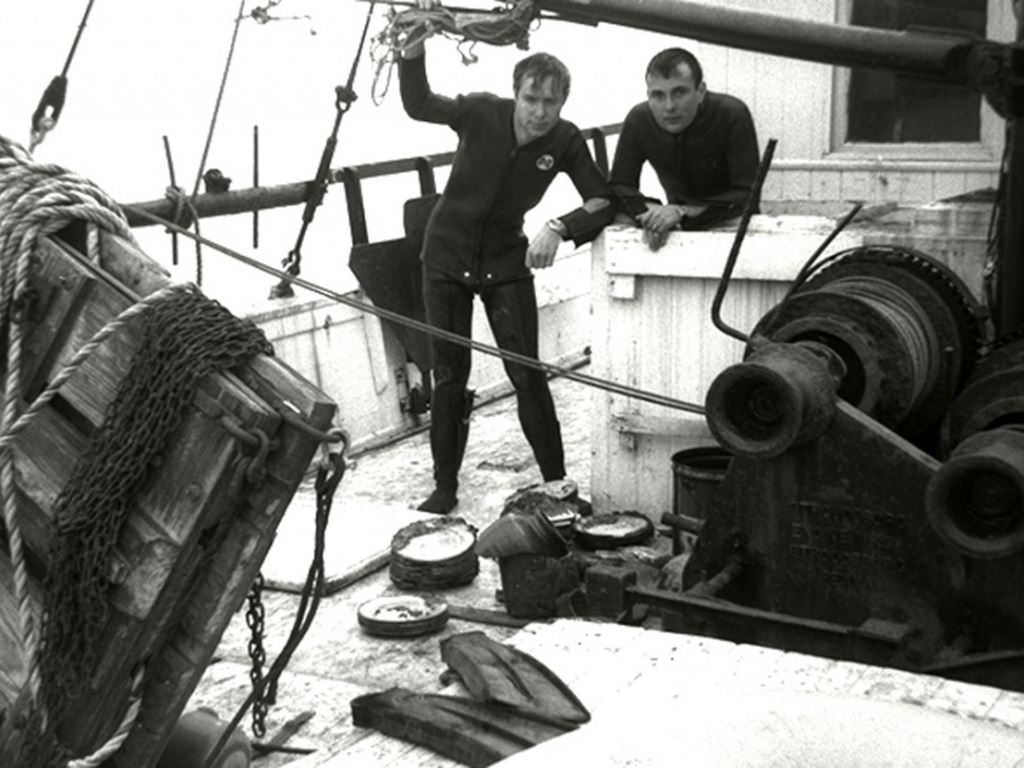
Dr. Edgerton Alvord “Peter” Throckmorton (July 30, 1928 – June 5, 1990): Awarded for Throckmorton’s recognition (in effect the real discovery) in 1959 of the importance of what is now known as the Cape Gelidonya shipwreck (c. 1200 BC) using information provided him in Bodrum, Turkey, by Kemal Aras, a sponge diver. Aras had first seen parts of the vessel’s cargo of bronze ingots in 1954 but had failed to recognize that it was a Bronze Age shipwreck and thus its archaeological importance. The ship is believed to have been Syrian or Phoenician. The team members of the first season in 1960 excavated under a permit issued to University of Pennsylvania, included Throckmorton, George Bass and wife Anne, Claude Duthuit, Honor Frost, Frederic Dumas and Joan du Plat Taylor. This was the oldest known shipwreck at the time, only being surpassed by the discovery of the Uluburun shipwreck in the early 1980s. This was one of the first projects that led to the development of the field of nautical archaeology. Bass, who came to be known to many as the “father of marine archaeology,” once said that if he was the father then Throckmorton was the “grandfather of marine archaeology.”
This page was compiled by Brad Needleman (President of Sea Research Society for 2021-2024)
Note by Needleman (based on his 2025 interview of Spence): In the 1960s, Peter Throckmorton, not yet having met Spence who was 19 years younger than him, mistakenly thought Spence’s discoveries had preceded both his and George Bass’ work. In Throckmorton’s 1968 peer review of a paper that Spence had presented on Spence’s discovery and archaeological work on the wreck of the Civil War blockade runner Mary Bowers at the 1967 Conference on Historic Site Archaeology, Throckmorton compared Spence to Heinrich Schliemann who is sometimes referred as the father of historical archaeology. Spence was flattered but knew that he and Throckmorton had both discovered their first shipwrecks in 1959 (a full year before Bass dove his first wreck) and Spence knew that Throckmorton’s discovery of the Cape Gelidonya shipwreck was far more important than any discoveries Spence had made by 1968 when Throckmorton wrote his review of Spence’s 1967 paper on the Mary Bowers. Although Spence personally considers Sir Robert F. Marx, who had already found numerous historically important wrecks by the mid 1950s, to be the true father of modern underwater archaeology, Spence recognizes that Bass’ contributions to underwater archaeology ultimately far outweighed the combined contributions of Marx, Spence and Throckmorton.
Leave A Comment